> For the complete documentation index, see [llms.txt](https://docs.upsmith.app/llms.txt). Markdown versions of documentation pages are available by appending `.md` to page URLs; this page is available as [Markdown](https://docs.upsmith.app/atlassian-cloud/salesforce-for-confluence/user-guide/salesforce-templates.md).
# Salesforce Templates
To facilitate reusability of Salesforce List, you can define Salesforce Template.
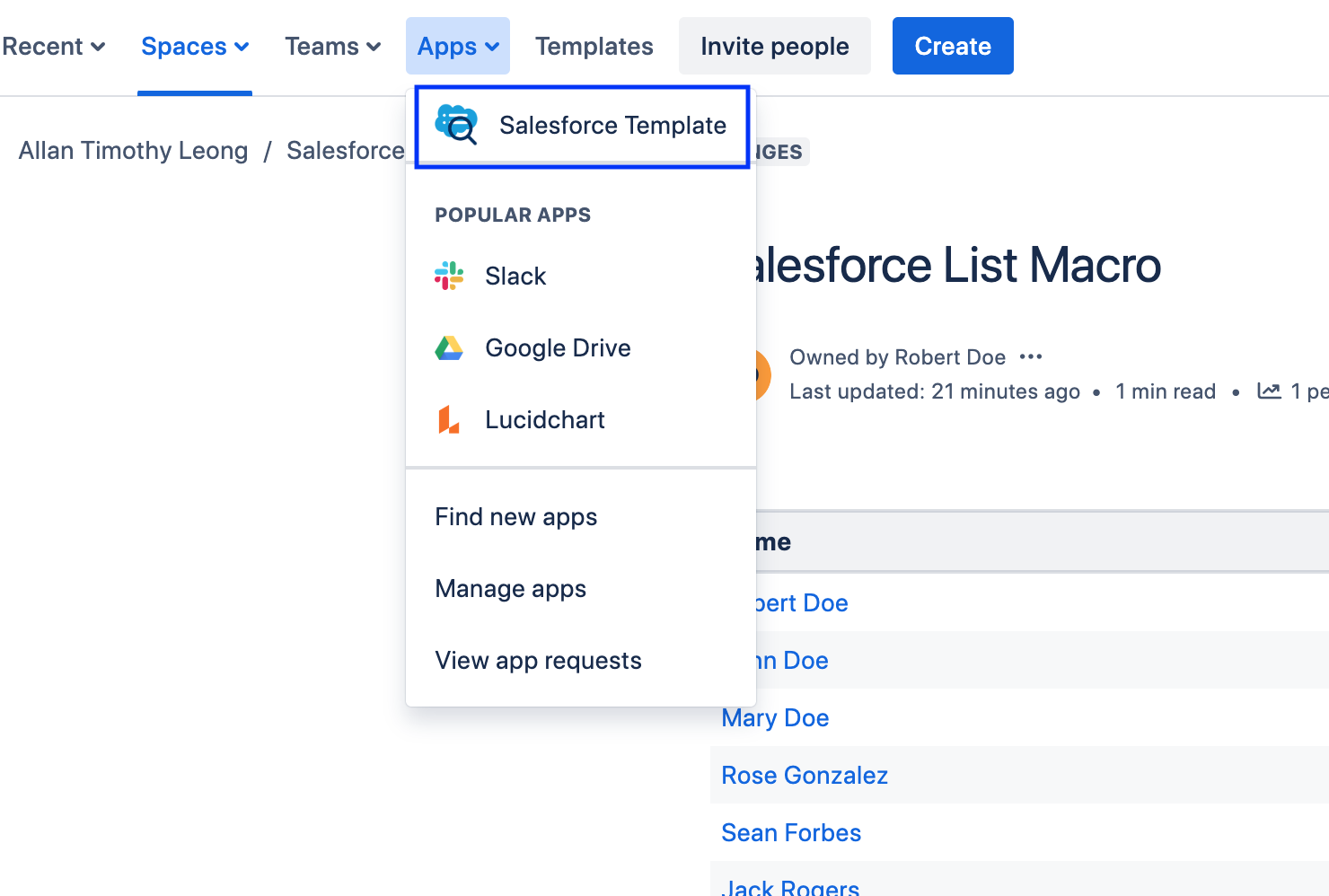
Locate **Apps** in the top navigation bar.
Select **Salesforce Template**.
### Adding new template
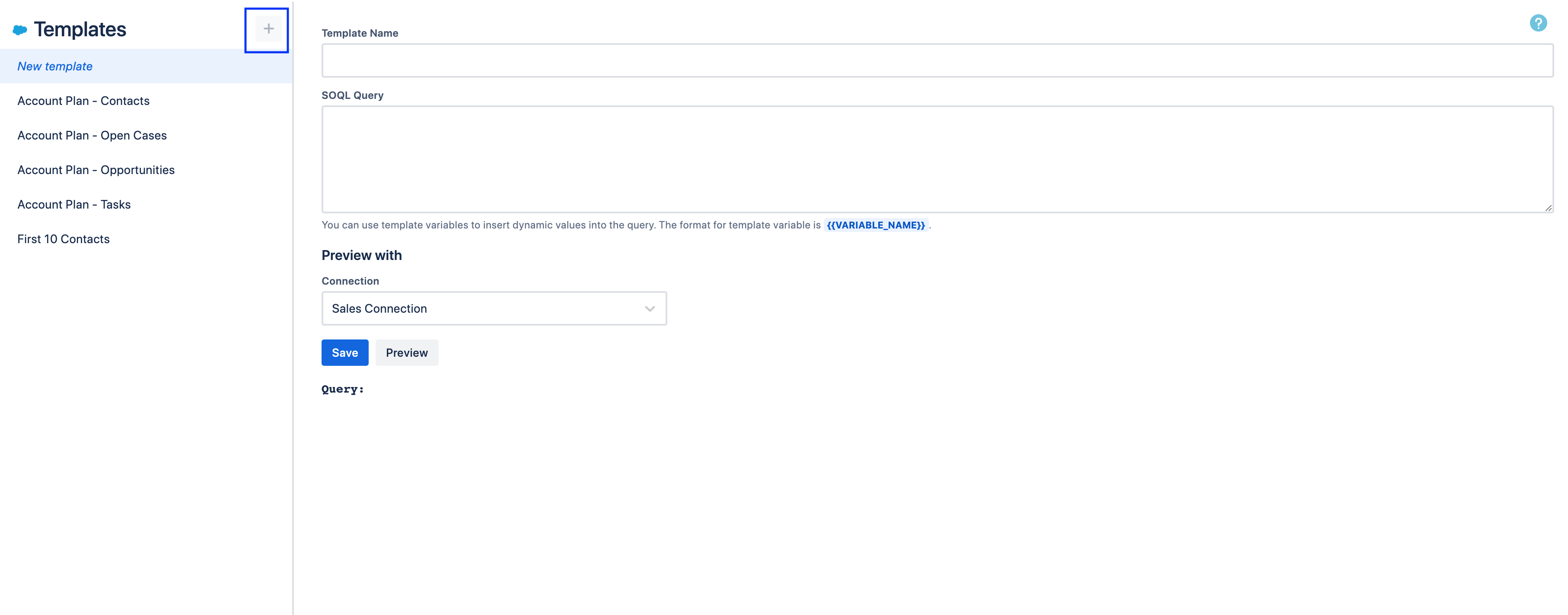
Click **+** to add new template.
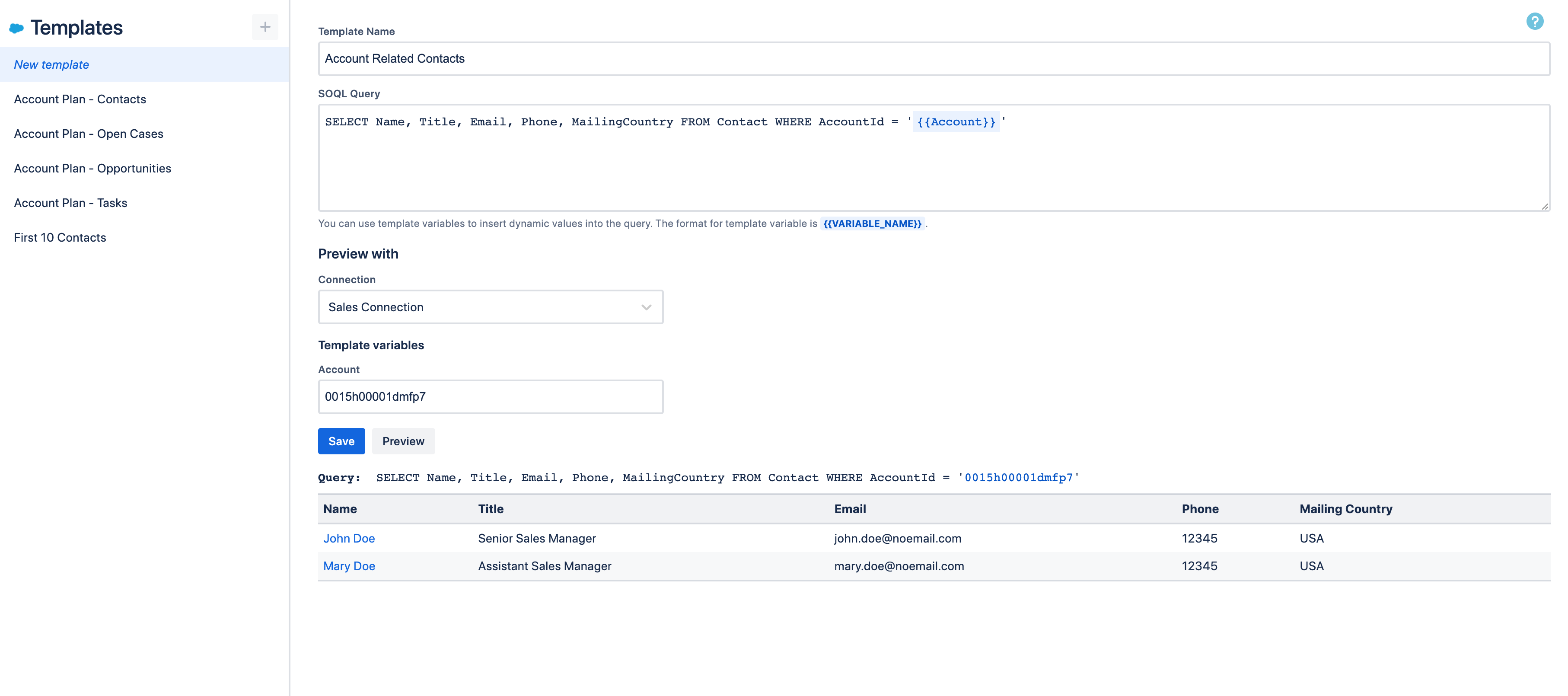
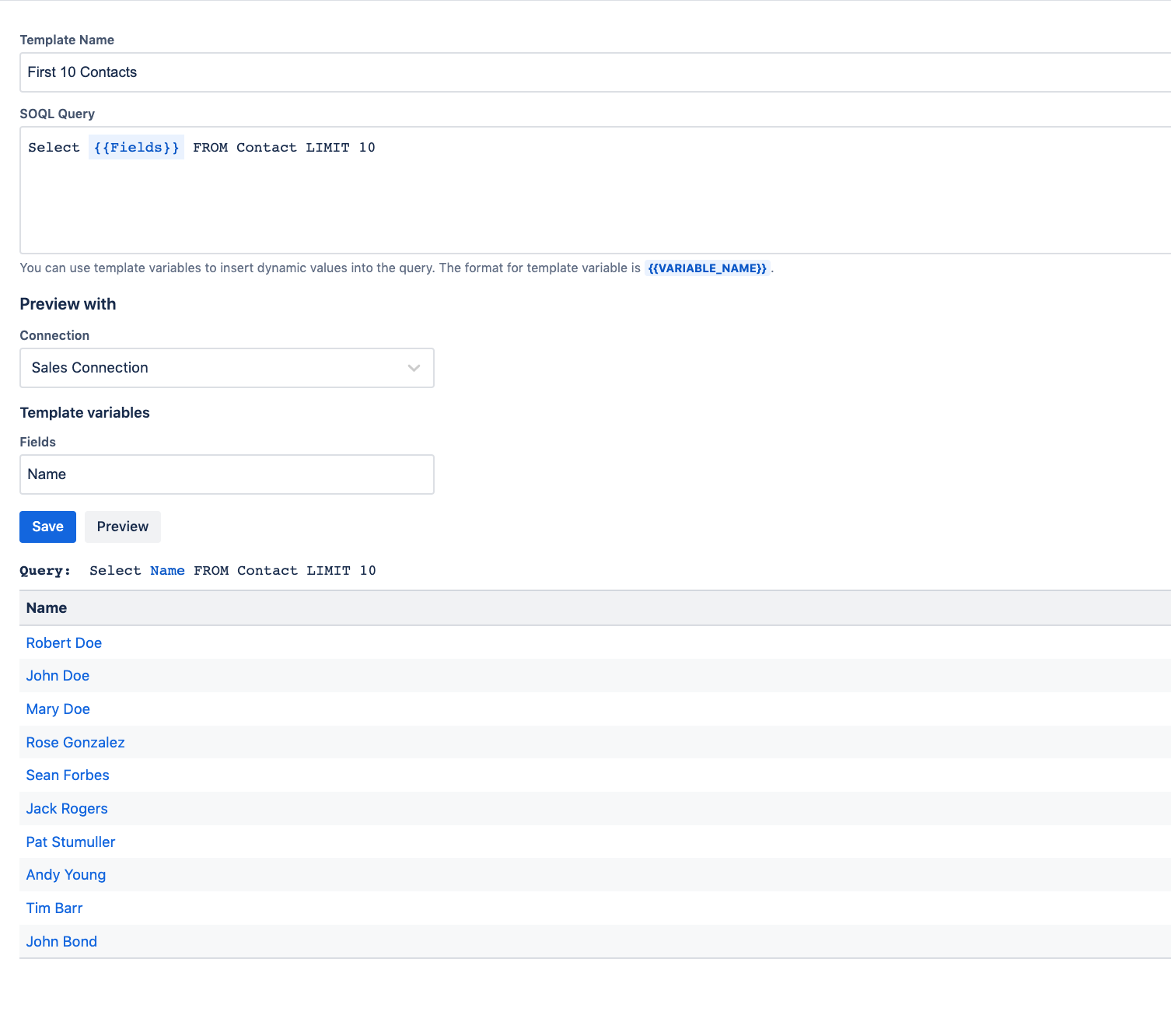
Input your desired Template Name and SOQL Query.
Click **Preview** before saving template.
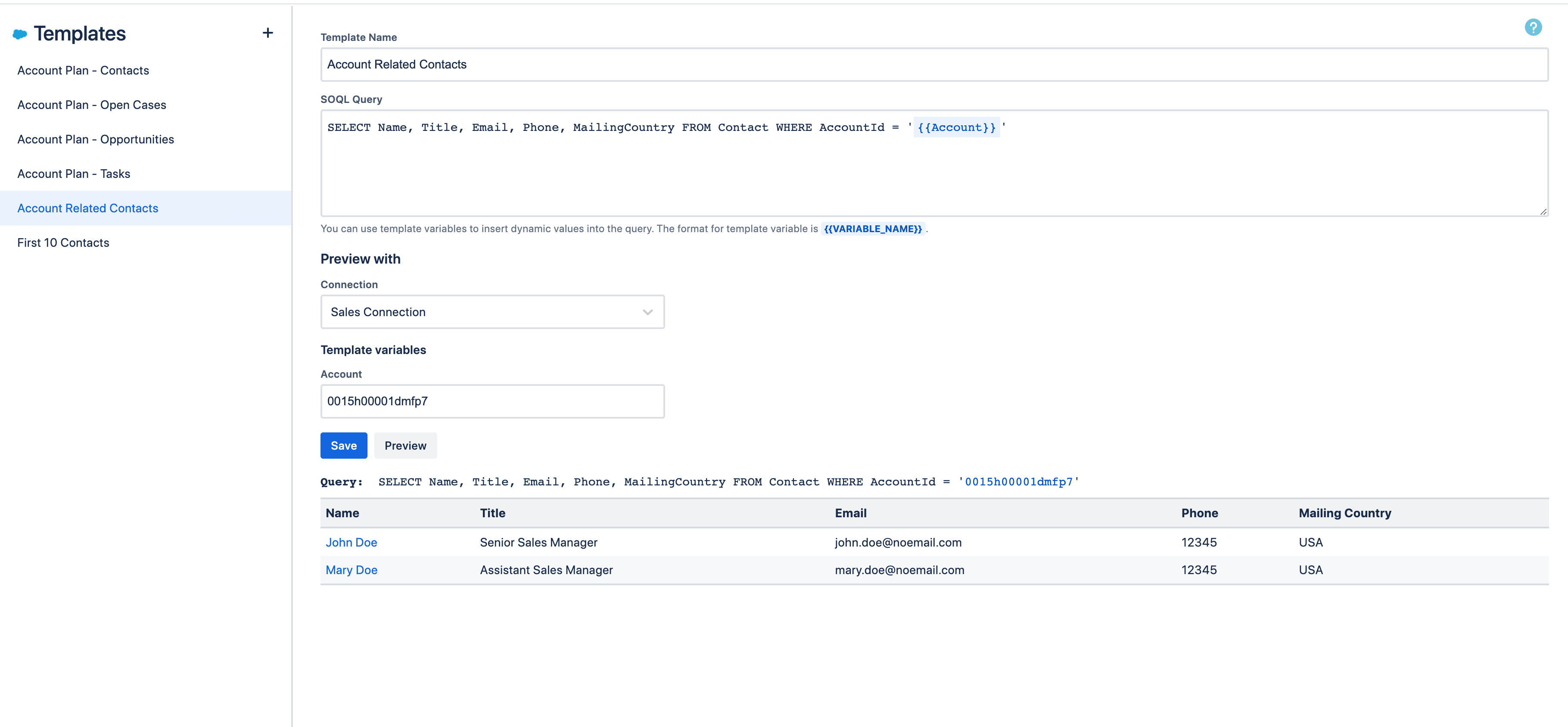
Once your result is successfully previewed, click **Save**.
### Using Template Variables
**Template variables** enable users to input variable values when inserting **Salesforce List** macro.
Use the syntax **{{VARIABLE\_NAME}}** in your SOQL query.
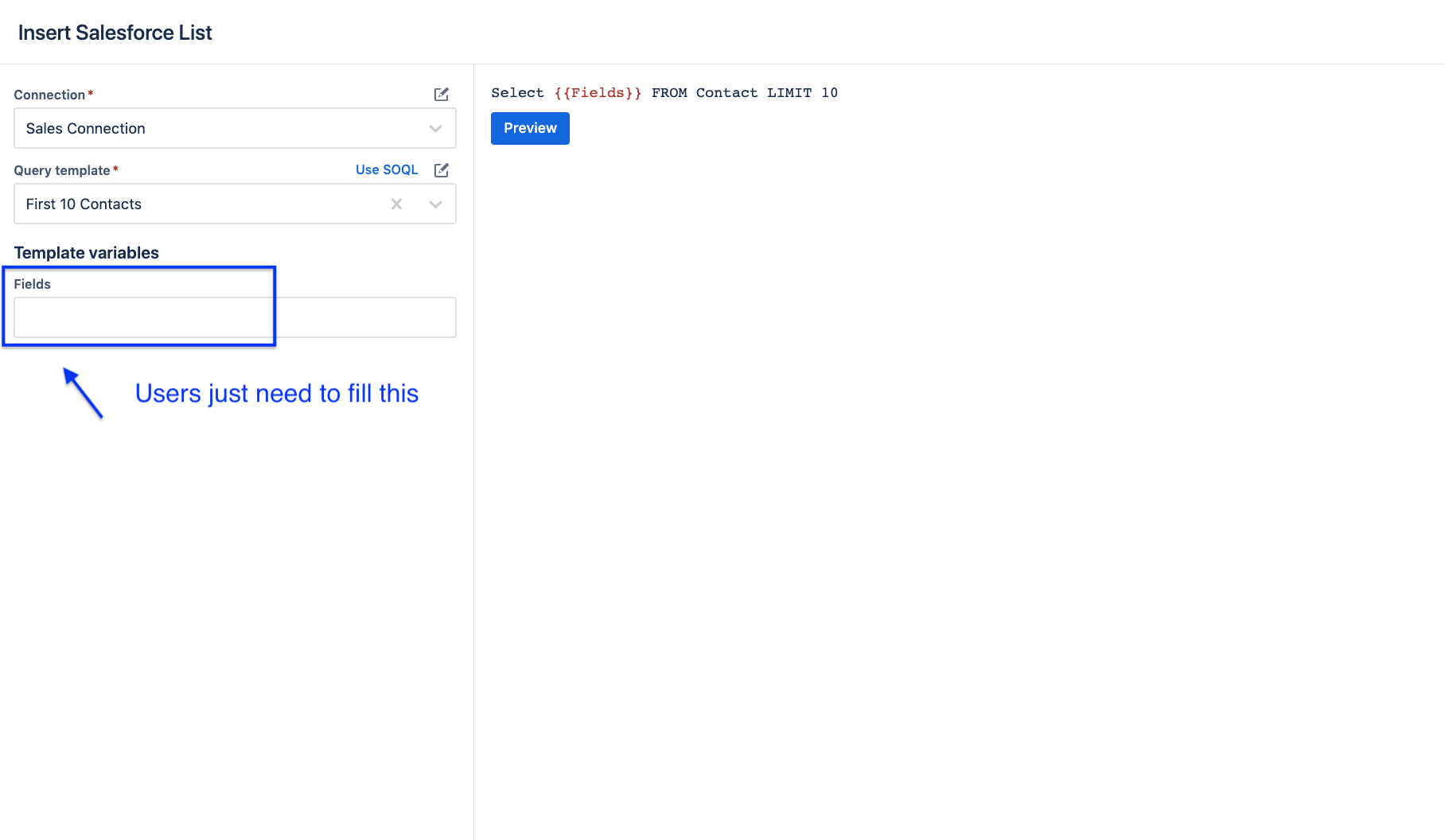
When inserting Salesforce List macro, users just need to fill in the variables.
In the example below, users only need to enter `Fields` variable to select relevant fields.